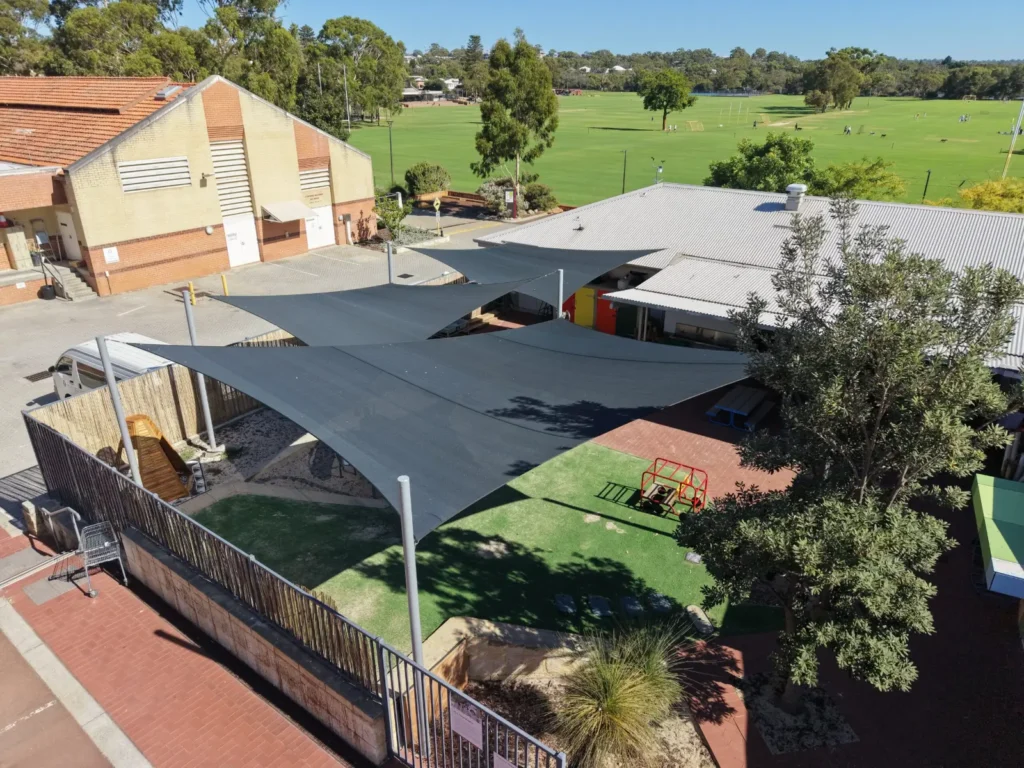
Australia has some of the highest UV levels in the world, and summer is when they peak. Cancer Council and ARPANSA advise that average UV levels reach 11 or higher across most of Australia on clear summer days, and that sun protection is needed whenever the UV Index is 3 or above. Good shade is one of the five SunSmart steps, alongside clothing, sunscreen, a hat and sunglasses. So how well do shade sails actually protect you?
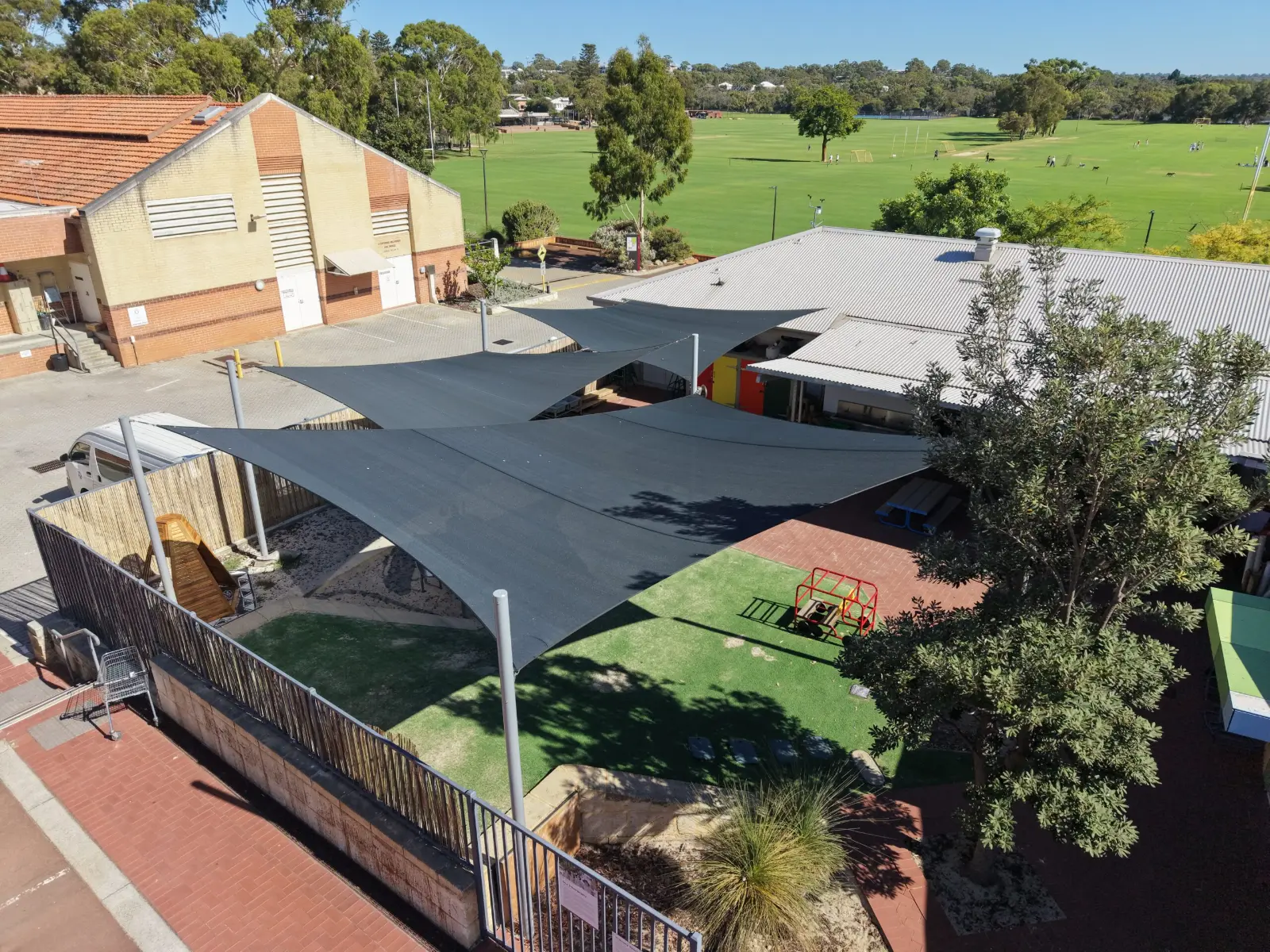
How much UV does a shade sail block?
Quality shade fabric blocks most of the direct UV that hits it. The exact figure depends on the fabric, its weave and its colour, so always check the UV block rating for the product you choose. However, the shade underneath is not the same as being indoors. According to the Cancer Institute NSW, well-designed shade can reduce UV exposure by up to 75%. The rest comes from UV that reaches you indirectly.
Why you can still get burnt in the shade
- Reflected UV – UV bounces off surfaces such as concrete, water, sand and light-coloured paving and reaches you from the side.
- Scattered UV – UV is scattered by the atmosphere and clouds, so it comes from the whole sky, not just the direction of the sun.
- The sun moves – a patch of shade at 10am may be in full sun by 2pm.
That is why shade works best combined with a hat, sunscreen and protective clothing.
What makes shade more effective?
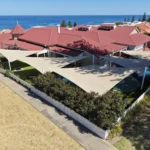
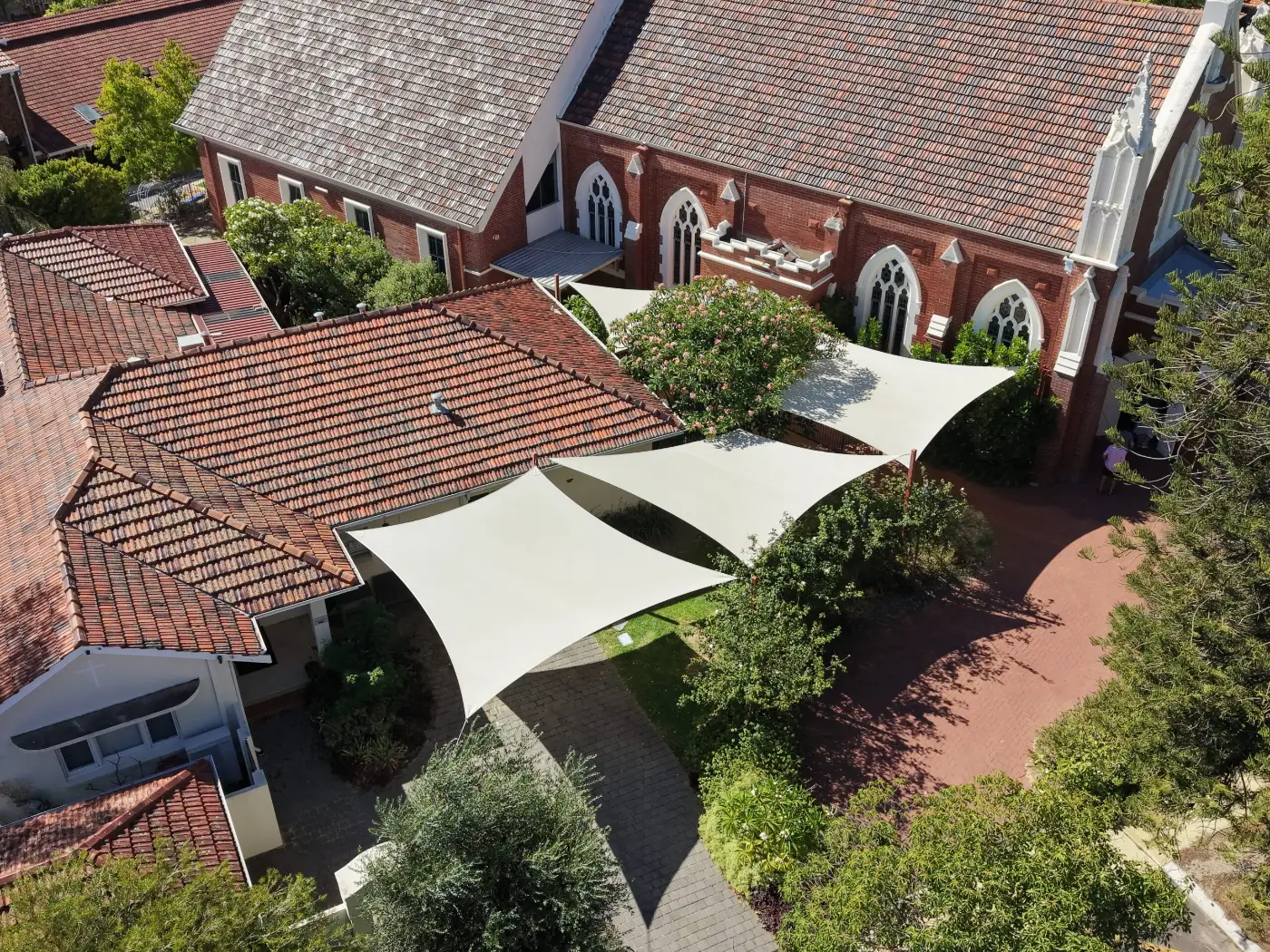
- Size and overhang – the bigger the sail and the further it extends past the area you use, the better it blocks low-angle and side UV.
- Height and angle – lower, angled sails protect better from side and afternoon sun, while still allowing airflow.
- Ground surfaces – grass and softer surfaces reflect less UV than concrete. The Cancer Institute NSW notes that shade can also lower playground surface temperatures by around 20°C.
- Side protection – side sails, screens or planting block low sun and reflected UV.
- Combining built and natural shade – trees plus shade structures give the best protection.
Shade for schools, childcare and public spaces
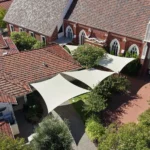
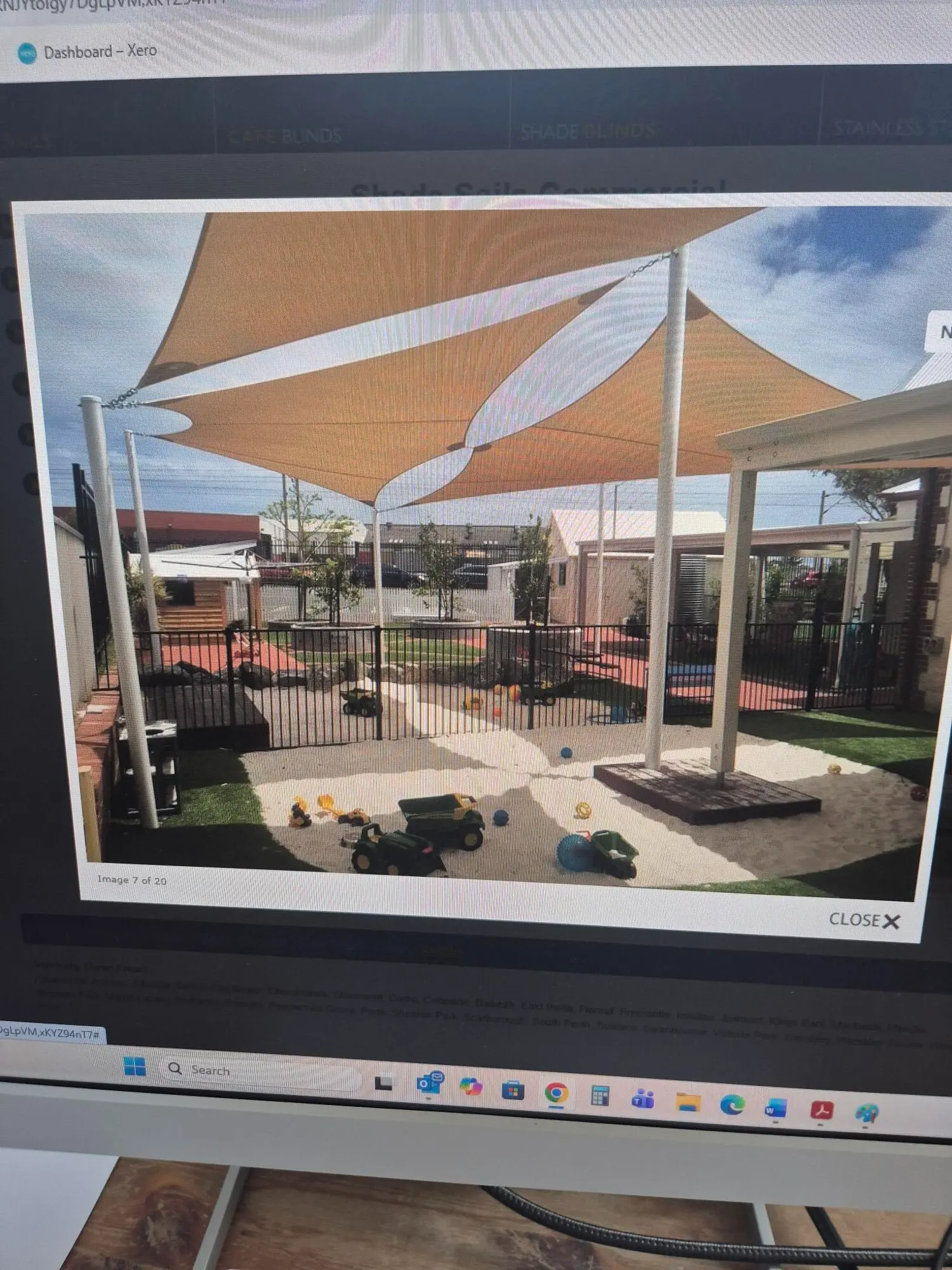
Children spend a lot of time outdoors in the middle of the day, so shade over play areas, sandpits and seating is especially important. Cancer Council WA publishes sun protection guidelines for WA schools. If you manage a school, centre or public space, see our pages on school and playground shade, childcare shade sails and council and public space shade, or read our guide to childcare shade requirements in WA.
Shade at home
For homes, focus on the places your family uses most in summer: the pool, the alfresco, the kids’ play area and the car. A well-placed residential shade sail makes these areas usable through the hottest months. If you want to stay dry as well, consider waterproof PVC structures.
Frequently asked questions
Do shade sails block 100% of UV?
No. The fabric blocks most direct UV, but reflected and scattered UV still reach you under the sail. Use shade together with other sun protection.
Does the colour of a shade sail affect UV protection?
Darker colours of the same fabric usually let slightly less UV through. Read our shade sail colour guide for more.
When is UV highest in Perth?
UV is highest in the middle of the day and through summer. Check the daily UV forecast from the Bureau of Meteorology or the SunSmart app for sun protection times.
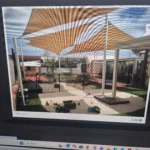
Want better shade before summer? Book a free measure and quote. We will design your shade as a 3D model so you can see how it performs across the day.
Sources: ARPANSA and Cancer Council; Cancer Institute NSW – What is high quality shade?