Choosing a shade sail colour is not just about matching your house. In Perth, where summer days are long and the sun is strong, colour affects how the area under the sail feels, how much glare there is, and how much UV gets through. Here is what to consider before you choose.
Does shade sail colour affect UV protection?
Yes, to a degree. With the same fabric, darker and brighter colours generally let less UV through than lighter colours, because the colour pigments absorb more UV. The difference between colours is usually smaller than the difference between a good-quality shade fabric and a poor one, so the fabric itself matters most. Always check the UV block rating for the specific fabric and colour you are considering.
Does colour change how hot it feels under the sail?
Darker fabrics absorb more of the sun’s energy, so the fabric itself gets hotter. Lighter colours reflect more light and heat. However, shade cloth is breathable, and much of the comfort under a sail comes from blocking direct sun and letting hot air escape. In practice:
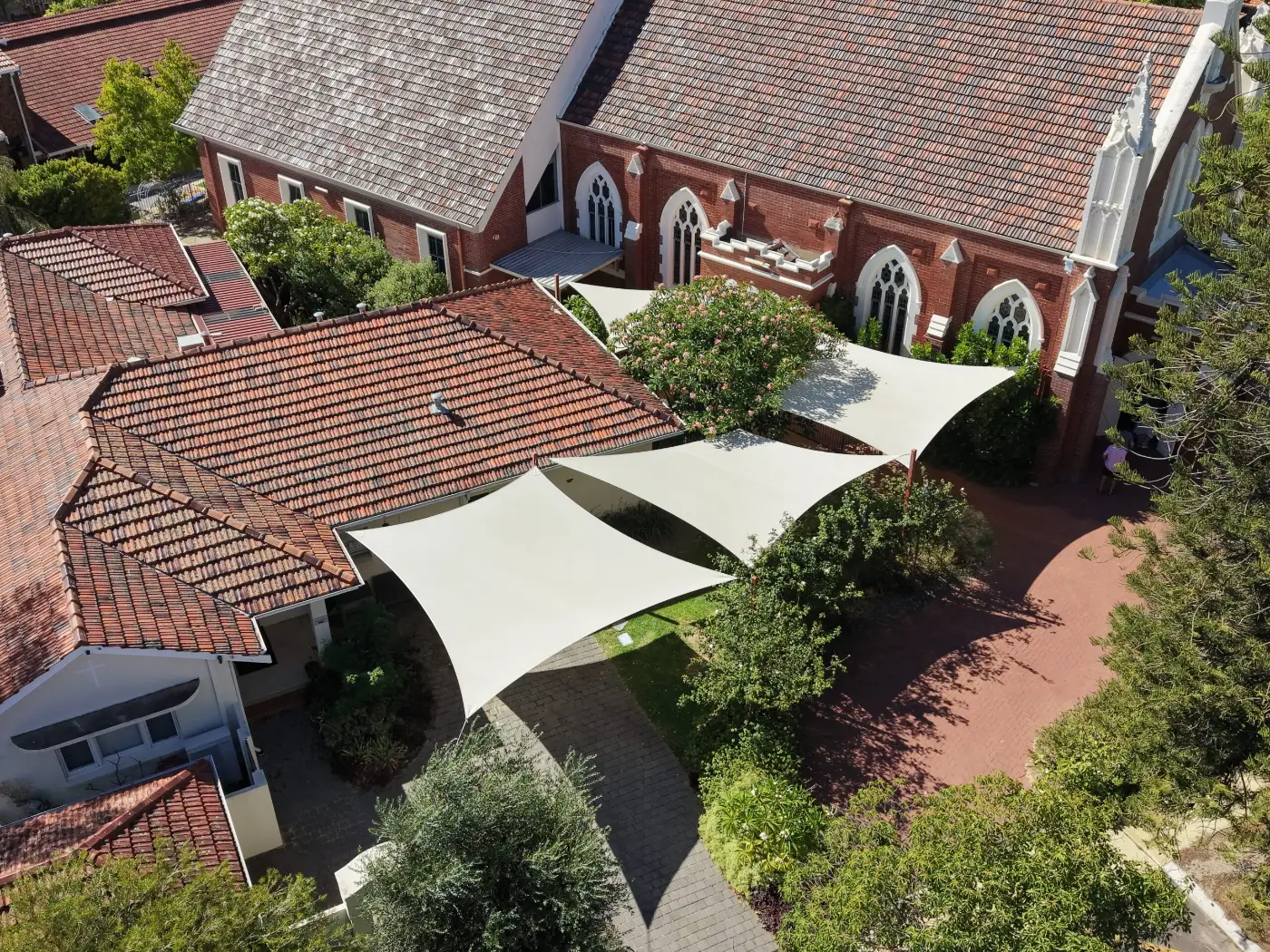
- Light colours (white, cream, sand) give a bright, airy feel and reflect more heat, but let a little more light and UV through and show dirt more easily.
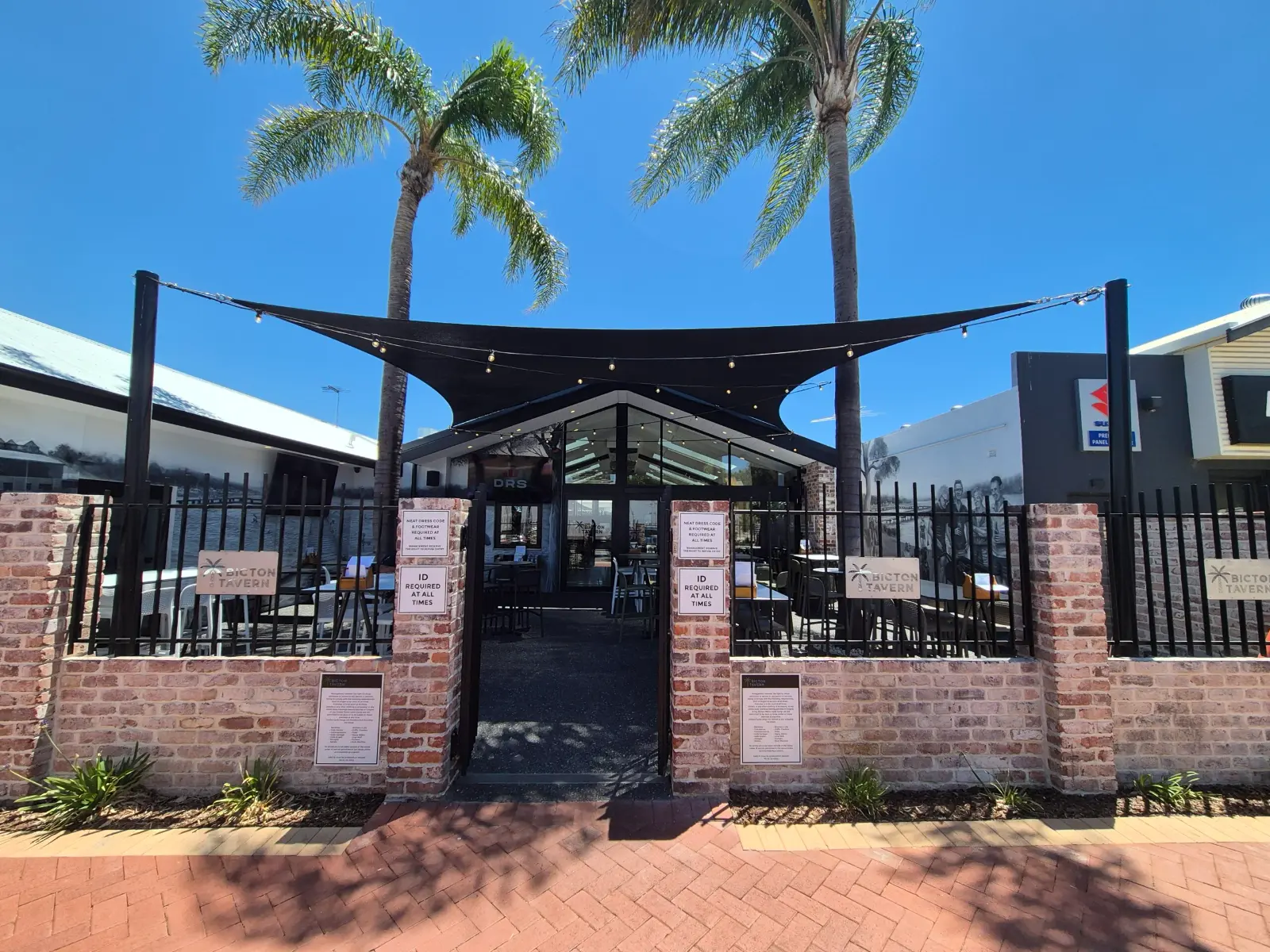
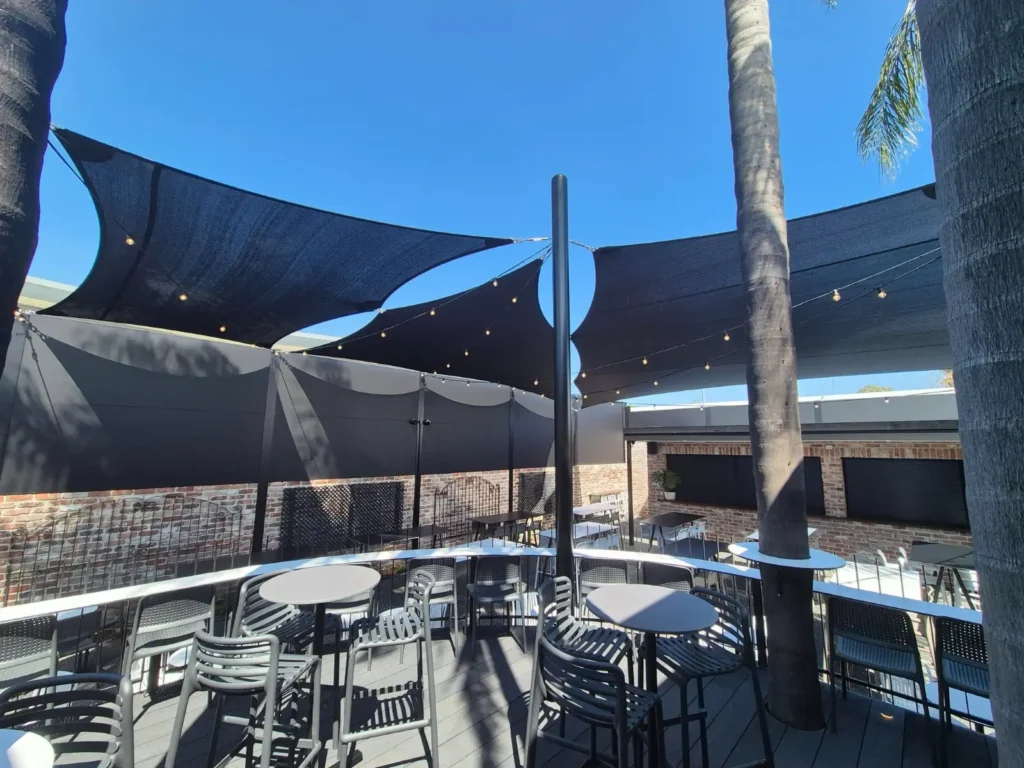
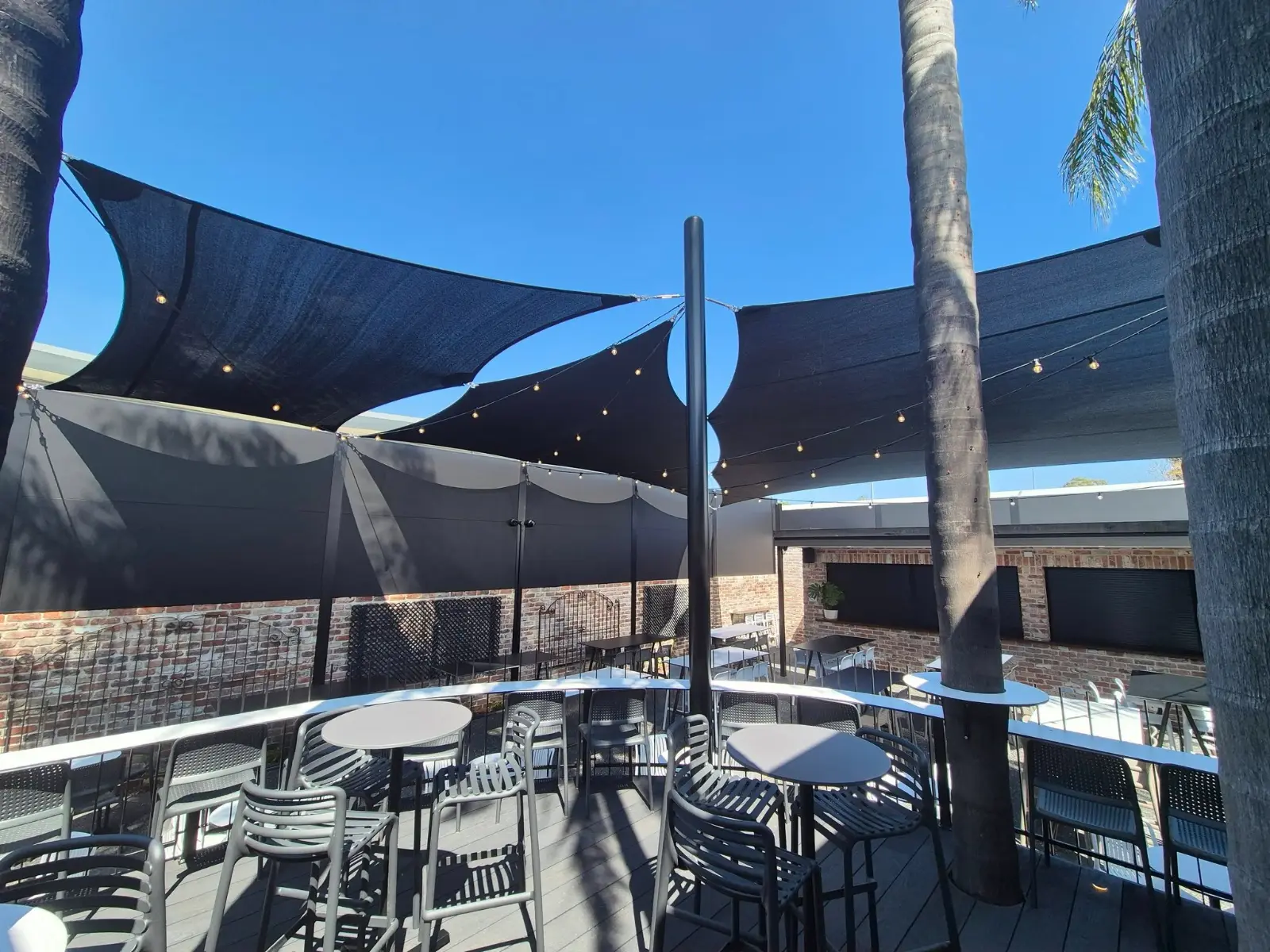
- Dark colours (charcoal, black, navy) give deeper, softer shade with less glare and generally lower UV transmission, and hide marks well.
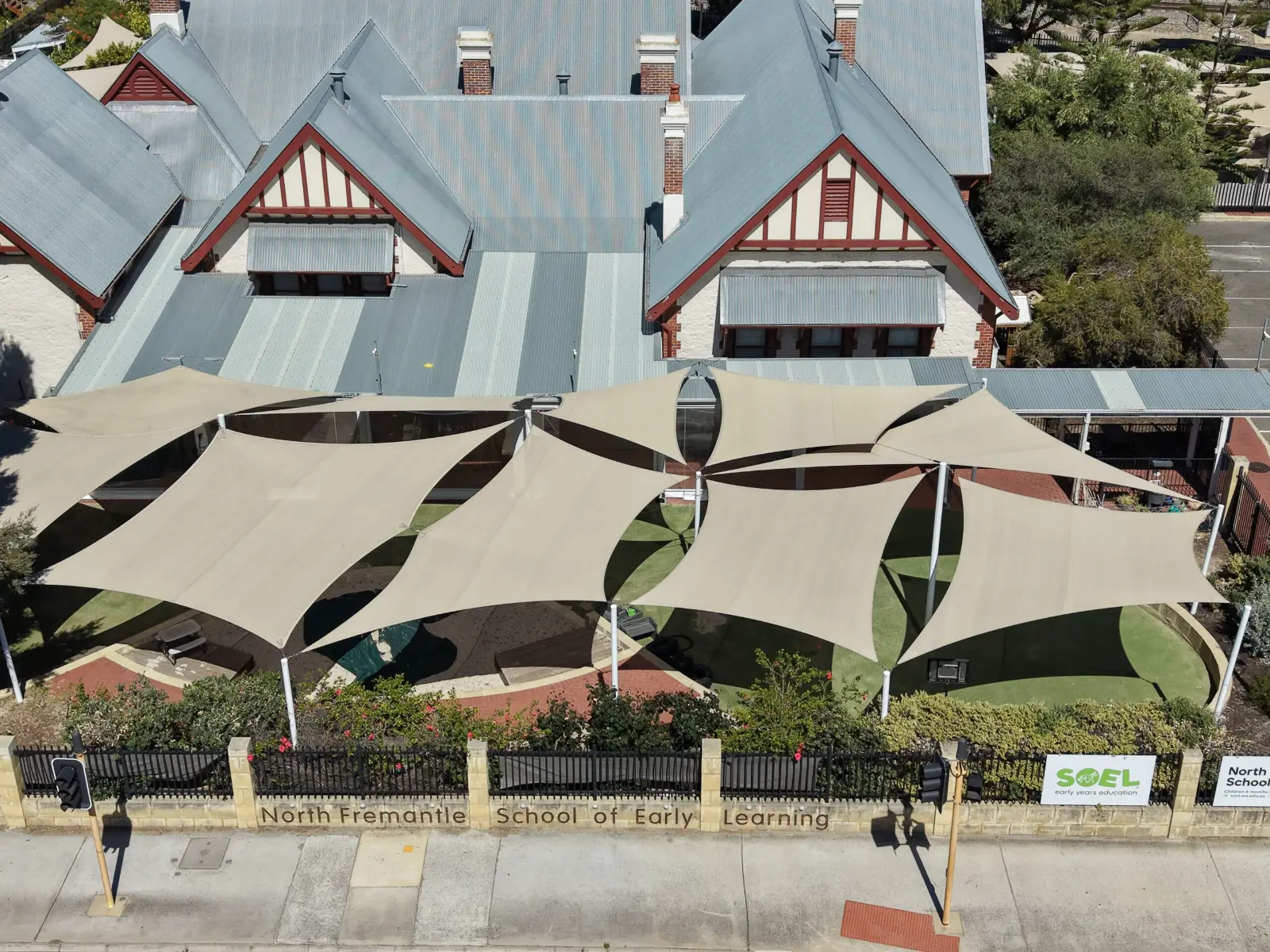
- Mid tones (grey, desert sand, gum leaf green) are a good middle ground and suit most Perth homes.
Which colour suits which space?
- Pools and alfrescos – darker colours cut glare off the water and paving. See our residential shade sails.
- Living areas next to windows – lighter or mid tones keep rooms from feeling dark.
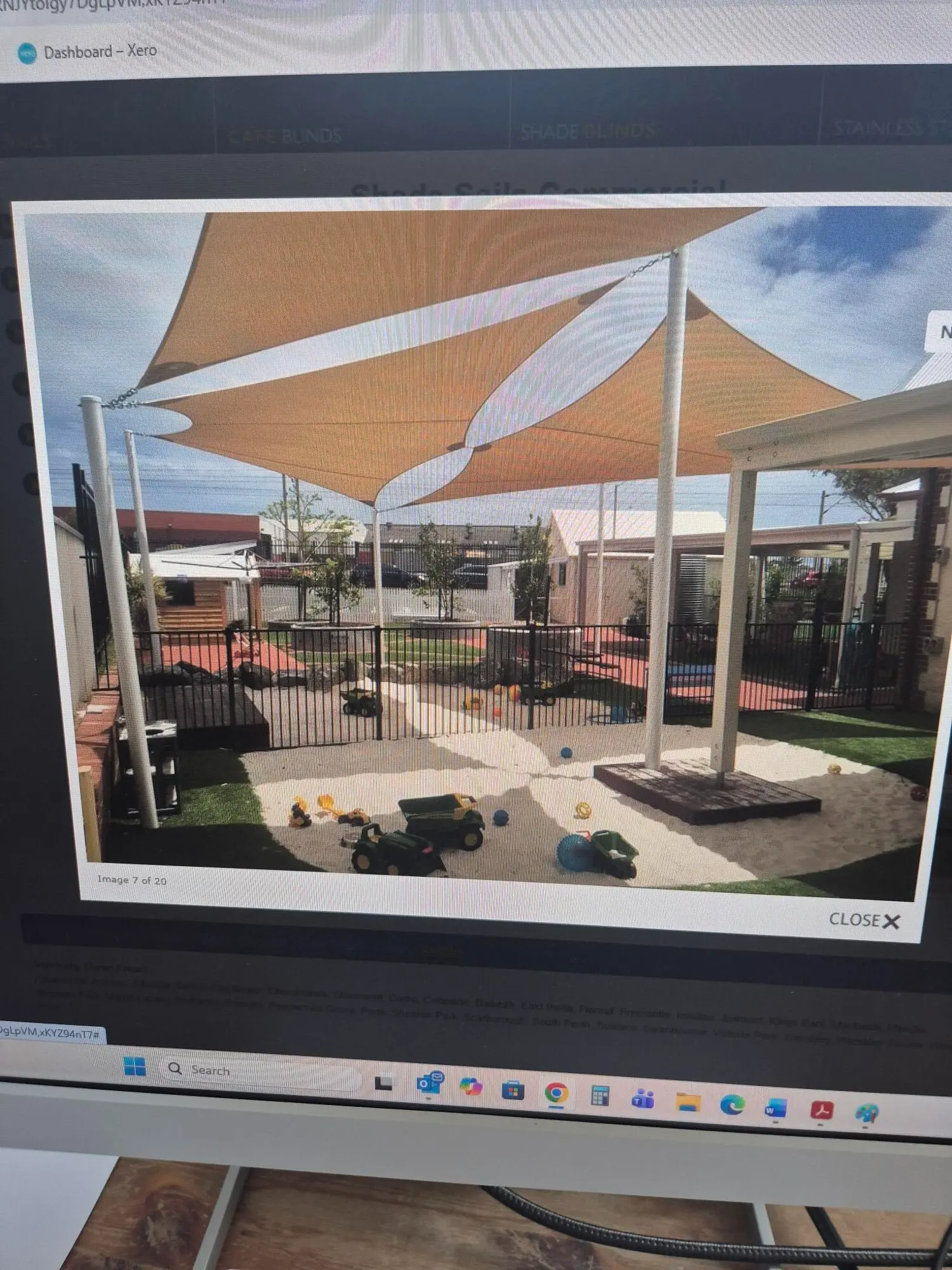
- Playgrounds, schools and childcare – UV protection is the priority. See school and playground shade and childcare shade sails.
- Car parks and commercial sites – mid or dark tones show less dust and look tidy longer. See car park shade structures.
Other things that matter more than colour
- Size and overhang – the sun moves across the day and the season. A sail that is too small or too high may leave you in the sun by mid-afternoon.
- Angle and orientation – angling a sail toward the afternoon sun blocks more of the hottest part of the day.
- Reflected UV – UV bounces off concrete, water and light paving, so shade on its own does not block all exposure. Sunscreen and hats are still needed.
- Rain – standard shade cloth is breathable and lets rain through. For a dry area, look at waterproof PVC shade structures.
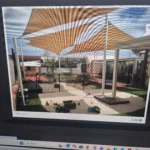
This is why we design every custom shade sail as a 3D model of your site, so you can see where the shade falls across the day before anything is built.
Frequently asked questions
What is the coolest colour for a shade sail?
Light colours reflect more heat, so the fabric stays cooler. Darker colours give deeper shade and less glare. Many Perth homeowners choose a mid tone for a balance of both.
Do black shade sails get too hot?
The fabric absorbs more heat, but because shade cloth breathes, the area underneath usually stays comfortable, especially with good height and airflow.
Will my shade sail fade in the Perth sun?
All fabrics fade a little over time with strong UV. Quality fabrics are made with UV stabilisers to slow this down.
Not sure which colour to choose? Book a free measure and quote and we will help you pick a fabric and colour that suits your space.